
Criminal Court Records in Clinton County
A criminal court record is the court file kept after the prosecutor files a criminal case. In Clinton County, criminal matters are handled through the Clinton County Circuit Court in the 43rd Judicial Circuit, with criminal court phone 816-539-3755. The record can include the charging document, docket entries, bond, counsel, motions, hearing settings, plea, trial events, verdict, disposition, sentence, probation, costs, and warrant or failure-to-appear entries where public.
The court record is not the same as an arrest report or jail roster. Arrest records and court charge records after arrest are addressed separately at Arrest Records & Charges, while current custody status belongs with Inmate Records. Active warrant questions may require the court docket, sheriff contact, or Warrant Records. For a broader view of civil, probate, family, traffic, and other cases, use Court Records.
The Clinton County Prosecuting Attorney page is one assigned source for criminal court records because it identifies the local prosecuting office that files criminal cases.
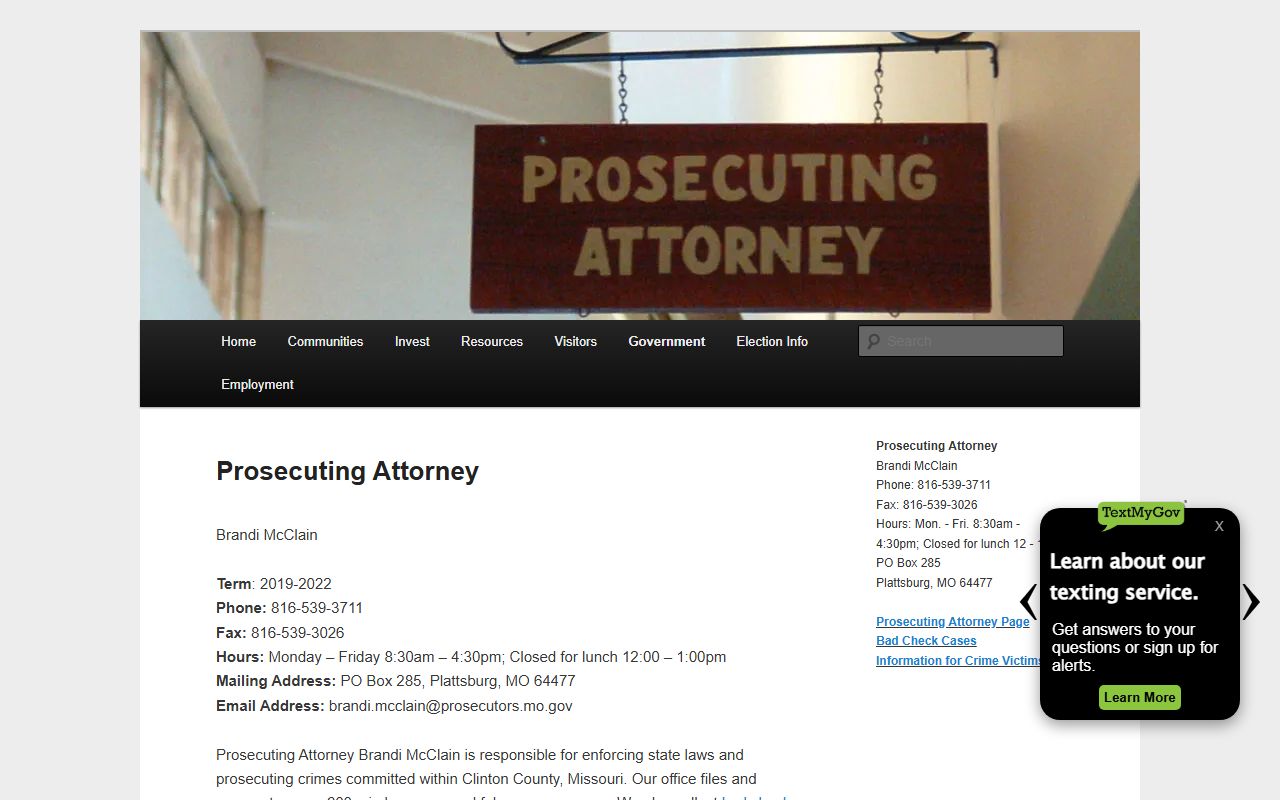
The prosecutor source helps separate the charging decision from later court-record access through Case.net and the Circuit Court Clerk.
How to Search Clinton County Criminal Court Records
Use Missouri Case.net for public criminal case lookup. The research file says public users can search by name, case number, or filing date and view docket entries, parties, judgments, scheduled hearings, and charges in public court cases. Automated access to Missouri Courts was blocked in the research environment, and the portal prohibits scraper-style repeated querying, so use the site manually and avoid automated case extraction.
- Open Case.net and choose case-number search if the summons, notice, bond paperwork, or prior docket provides the full Missouri case number.
- If no case number is available, use litigant name search with the defendant's last name and first name, then filter by Clinton County or the 43rd Judicial Circuit when available.
- Use filing-date search or scheduled-hearing search when monitoring new filings, arraignments, criminal settings, docket calls, or upcoming hearings.
- Open the matching criminal case and read the docket, charges, bond entries, counsel, dispositions, sentencing entries, and costs that are public.
- For a certified copy, missing file, older matter, sealed record question, or official verification, call the criminal court line at 816-539-3755 or the civil/circuit clerk line at 816-539-3731.
Statewide criminal-history tools are different from the court docket. The research file assigns the Missouri Automated Criminal History Site, known as MACHS, and the Missouri State Highway Patrol criminal record check page to criminal-record context. Those services relate to criminal history or background-check products, while Case.net shows public court case information. For employment, tenant, insurance, credit, or other FCRA-regulated screening, use a legally compliant background-check process rather than casual court lookup.
Stages of a Criminal Case
Criminal cases begin with law enforcement investigation, but the court case starts when charges are filed. The prosecutor's crime-victim information states that law enforcement investigates and sends reports to the Prosecutor's Office, where the office decides whether there is enough evidence to move forward with criminal prosecution. Once filed, the Circuit Court docket becomes the public tracking record unless the matter is sealed, juvenile, expunged, or otherwise restricted.
The prosecutor's crime-victim information page is assigned because it explains the local law-enforcement-to-prosecutor review step.
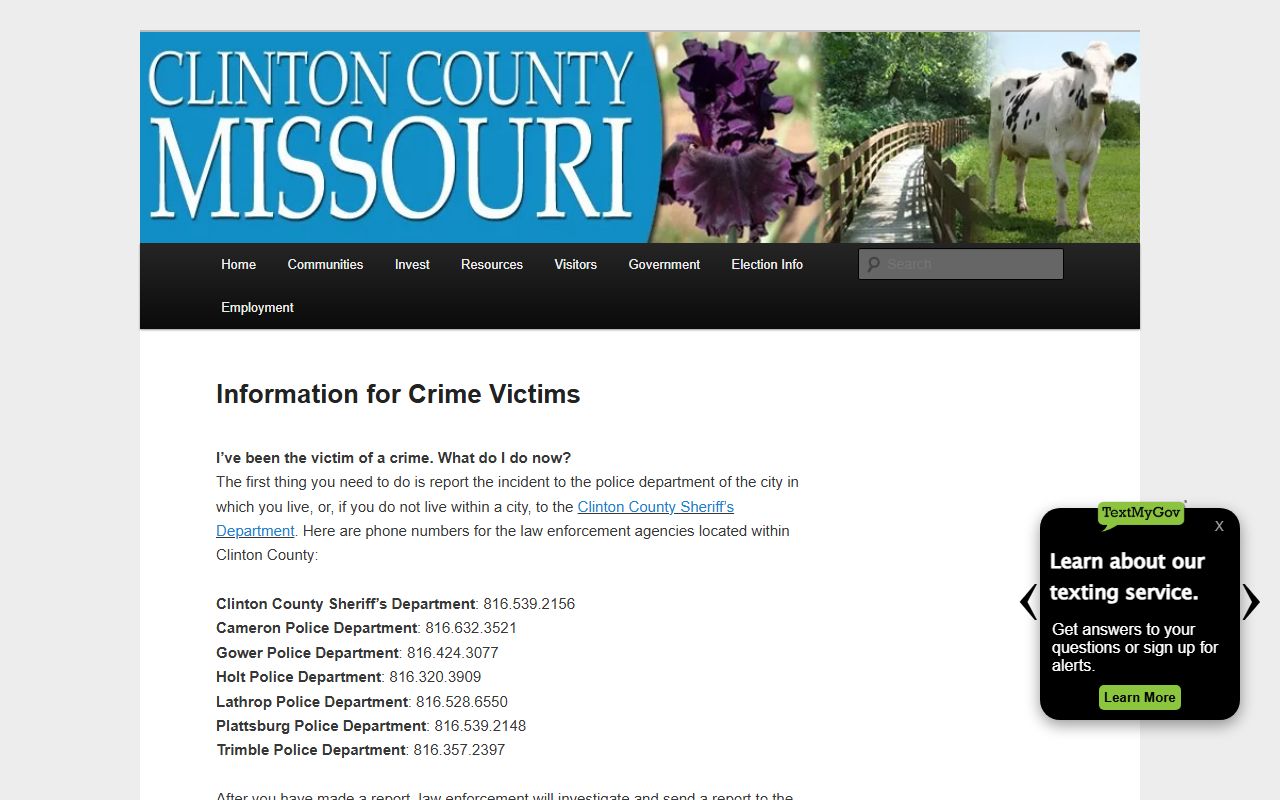
That review step is why an arrest, jail booking, police report, and criminal court case may not all appear at the same time or carry the same details.
Case flow: Charges Filed › Arraignment › Pretrial / Motions › Plea or Trial › Disposition › Sentencing
| Stage | What Happens |
|---|---|
| Charges Filed | The prosecutor files a complaint, information, or other charging document, and the case receives a court number. |
| Arraignment | The defendant appears, charges are addressed, plea procedure begins, and counsel or bond issues may be noted. |
| Pretrial / Motions | The docket may show discovery activity, motions, continuances, bond changes, hearings, and attorney entries. |
| Plea or Trial | The case may resolve by plea, trial verdict, dismissal, nolle prosequi, or another court disposition. |
| Sentencing | The record may show sentence, probation, SIS, SES, fines, costs, restitution, jail or prison terms, and payment details. |
What a Clinton County Criminal Court Record Shows
Criminal court records are case-level records. They often show the charge history, not just the final result. A single case may include several counts, amended charges, dismissed counts, pleas to lesser offenses, bond entries, warrants, continuances, or probation terms. Public fields can vary, and some identifiers should be redacted under Missouri access and privacy rules.
| Field | What It Shows |
|---|---|
| Case Number | The full Missouri case number assigned by the Clinton County Circuit Court for lookup and copy requests. |
| Defendant | The person charged in the criminal case, with public identifiers limited by redaction rules. |
| Charges | Offense description, charge code or statute, level or class, filing date, count number, and amended or dismissed status. |
| Bond | Bond amount, type, conditions, release order, warrant, capias, or failure-to-appear status when shown. |
| Plea | The defendant's formal answer to a charge, including guilty, not guilty, or other recorded plea events. |
| Disposition | The outcome of a charge or case, such as guilty, dismissed, nolle prosequi, acquittal, or other court result. |
| Sentence | Probation, SIS, SES, fines, costs, restitution, jail or prison terms, and other sentencing conditions when public. |
Charges vs. Convictions
A charge is an accusation filed in court. A conviction is a final outcome based on a guilty plea, finding, or verdict. Clinton County criminal court records may show charges that were later dismissed, amended, reduced, or resolved without a conviction. The disposition field matters because it shows the court result for each count or case. A docket entry for a warrant or bond issue also does not prove conviction.
| Charge | Conviction | |
|---|---|---|
| Stage | Accusation filed by prosecutor | Final guilty result by plea, finding, or verdict |
| Record Location | Charge section and docket entries | Disposition, judgment, and sentencing entries |
| Public Meaning | Shows allegation, not final guilt | Shows criminal judgment unless later sealed, expunged, or otherwise changed |
The bad-check case source is assigned to this page because it reflects one local prosecuting-attorney function tied to misdemeanor and felony filings.
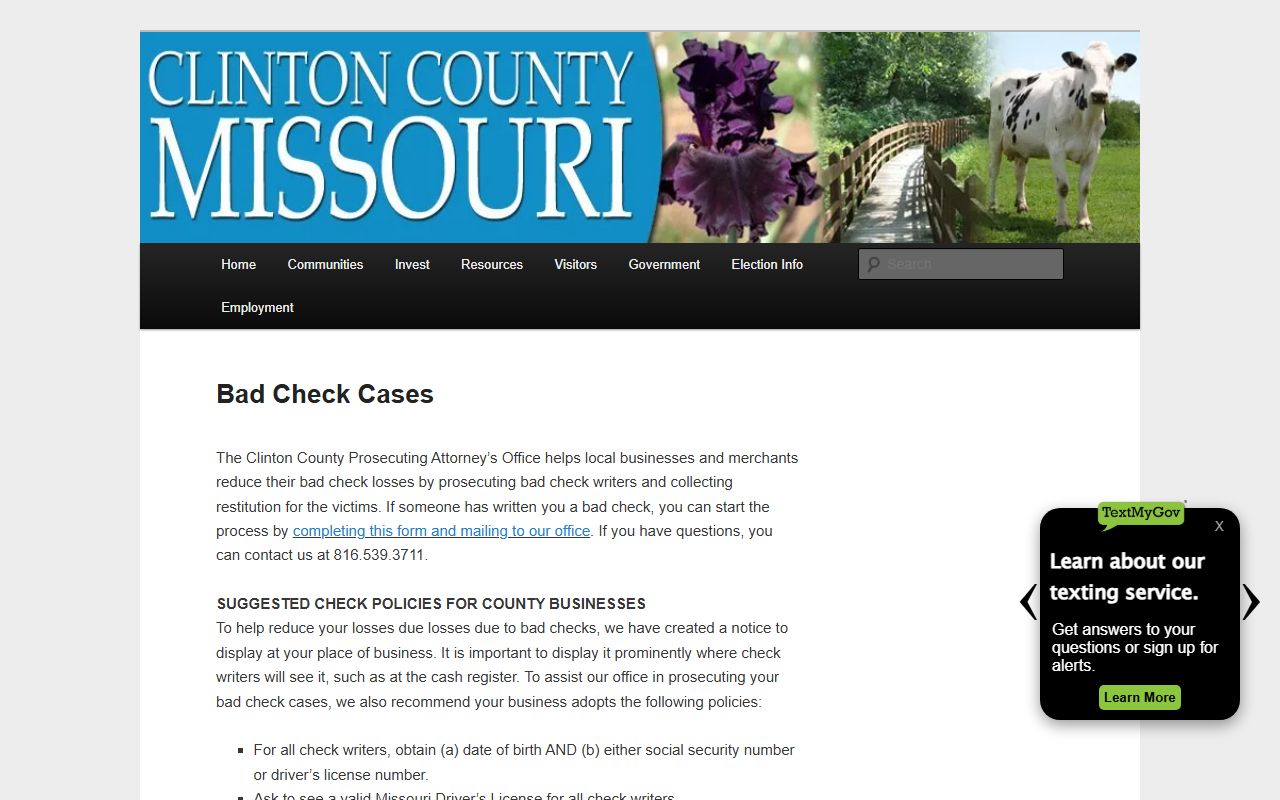
Bad-check prosecution is a narrow topic, but it reinforces the broader research point that the prosecutor files criminal matters and those filings become court records only after court action begins.
Reading Dispositions and Sentences
Disposition language should be read carefully. "Dismissed with prejudice" generally means the matter cannot be refiled. "Dismissed without prejudice" means it may be refiled if legally allowed. "Nolle prosequi" reflects a prosecutor's decision not to pursue a charge. "SIS" means suspended imposition of sentence, often probation without immediate final conviction if completed as ordered. "SES" means suspended execution of sentence, where a sentence is imposed but execution is suspended on conditions.
A sentence entry may include probation, fines, costs, restitution, jail, prison, payment plans, or other court conditions. Financial entries can include court costs and receipted payments. If the docket result is unclear, obtain certified copies or ask the clerk what records exist. Clerks can provide records and procedural information, but legal interpretation should come from an attorney.
Sealed vs. Expunged Records
Sealed and expunged records are not ordinary public records. Under Missouri law, closed records must be removed from public-access systems and held separately or confidentially where the statute applies. Eligible criminal offenses, violations, and infractions may be expunged under RSMo 610.140, while RSMo 610.120 addresses closed record handling. Arrest-record expungement has separate rules under RSMo 610.122.
| Sealed | Expunged | |
|---|---|---|
| Visibility | Not available to the general public without authority or court permission | Closed from public access after an order if statutory conditions are met |
| Law Enforcement | Access may remain for authorized entities | Limited statutory access may remain for authorized entities |
| Eligibility | Depends on case type, order, statute, and court rules | Depends on offense type, waiting periods, sentence completion, restitution, and later convictions |
Public Access to Criminal Court Records
Missouri's public-record policy favors access unless another law closes the record, but criminal court access is still limited by judiciary rules, sealing orders, expungement orders, juvenile confidentiality, and redaction requirements. Start with Case.net for public docket information and use the Circuit Court Clerk for certified copies or official verification. County-government Sunshine requests should go to the public body that created or retains the county record, but court case records are maintained by the court system.
The Missouri State Highway Patrol criminal record check page is assigned because statewide criminal-history checks are adjacent to, but different from, Clinton County criminal court records.
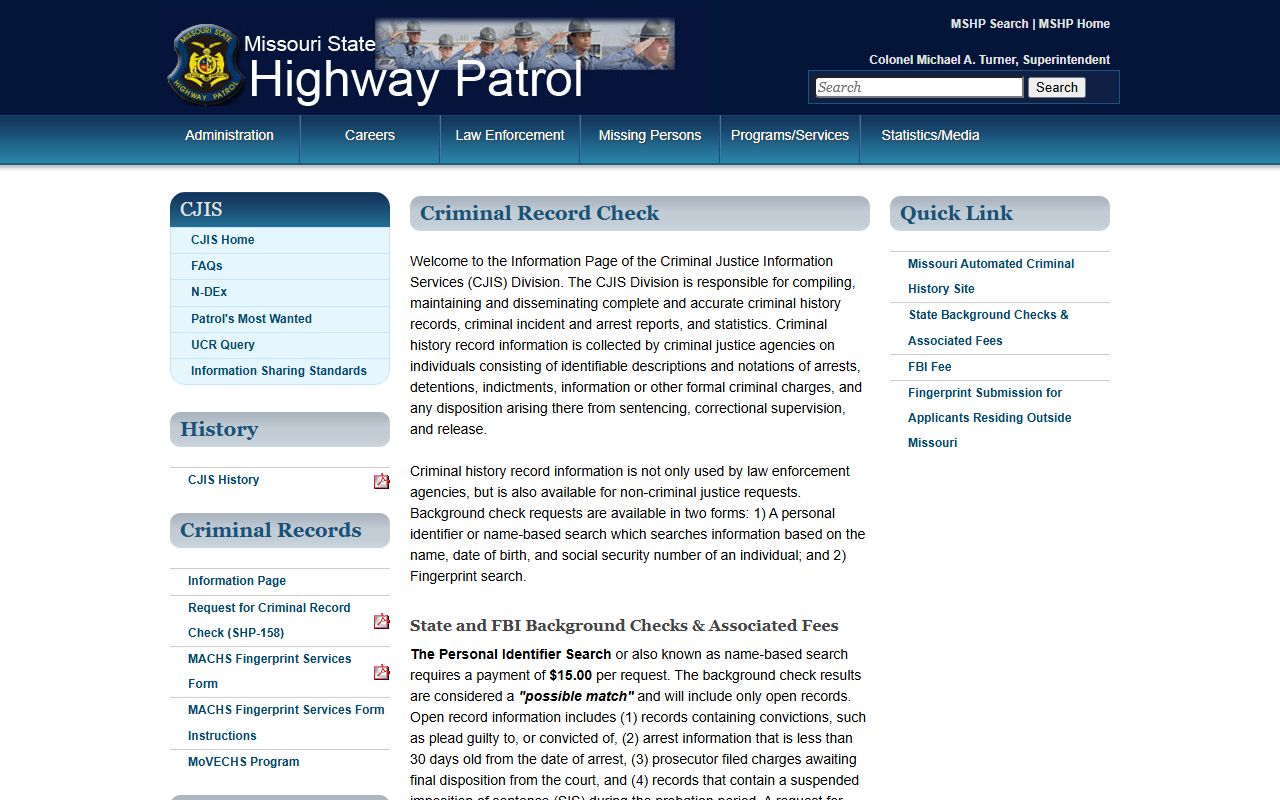
Use the court docket for case-specific court events and the Highway Patrol or MACHS resources only when a statewide criminal-history product is the actual task.
Key Statutes:
RSMo 610.011 - Missouri policy favors open public records unless another law closes them.
RSMo 610.140 - Eligible criminal offenses, violations, and infractions can be expunged and made confidential when statutory conditions are met.
Background Check Considerations
A Clinton County criminal court search is useful for public case research, but it is not the same as a legally compliant background check. Case.net can show case events and public outcomes, while MACHS and Missouri State Highway Patrol sources relate to criminal-history products. Some records may be sealed, expunged, incomplete online, restricted, or not yet updated after a court event. For regulated screening, use a provider and process that complies with applicable federal and state law.
The MACHS portal is assigned as a statewide criminal-history source for Missouri.
MACHS is relevant when the task is statewide criminal-history screening rather than reading a Clinton County court docket entry.
Important: This website is not a consumer reporting agency and cannot be used for FCRA-regulated eligibility decisions.
Restricted Criminal Court Records in Clinton County
Juvenile cases are generally confidential under RSMo 211.321. Expunged and sealed criminal records are not available to the general public in the same way as ordinary adult criminal dockets. Court records may also redact Social Security numbers, financial account numbers, dates of birth, victim identifiers, minor names, and protected medical or mental-health information. Adoption and some mental-health proceedings are not ordinary public criminal records.
Public defender information can appear in a criminal case when counsel is appointed, but eligibility and representation are handled outside the court-record search itself. Clinton County falls in Missouri State Public Defender District 43, Chillicothe office, with District Defender Kelly Miller listed in the research file. The Missouri State Public Defender offices source is assigned to this page for that defense-counsel context.
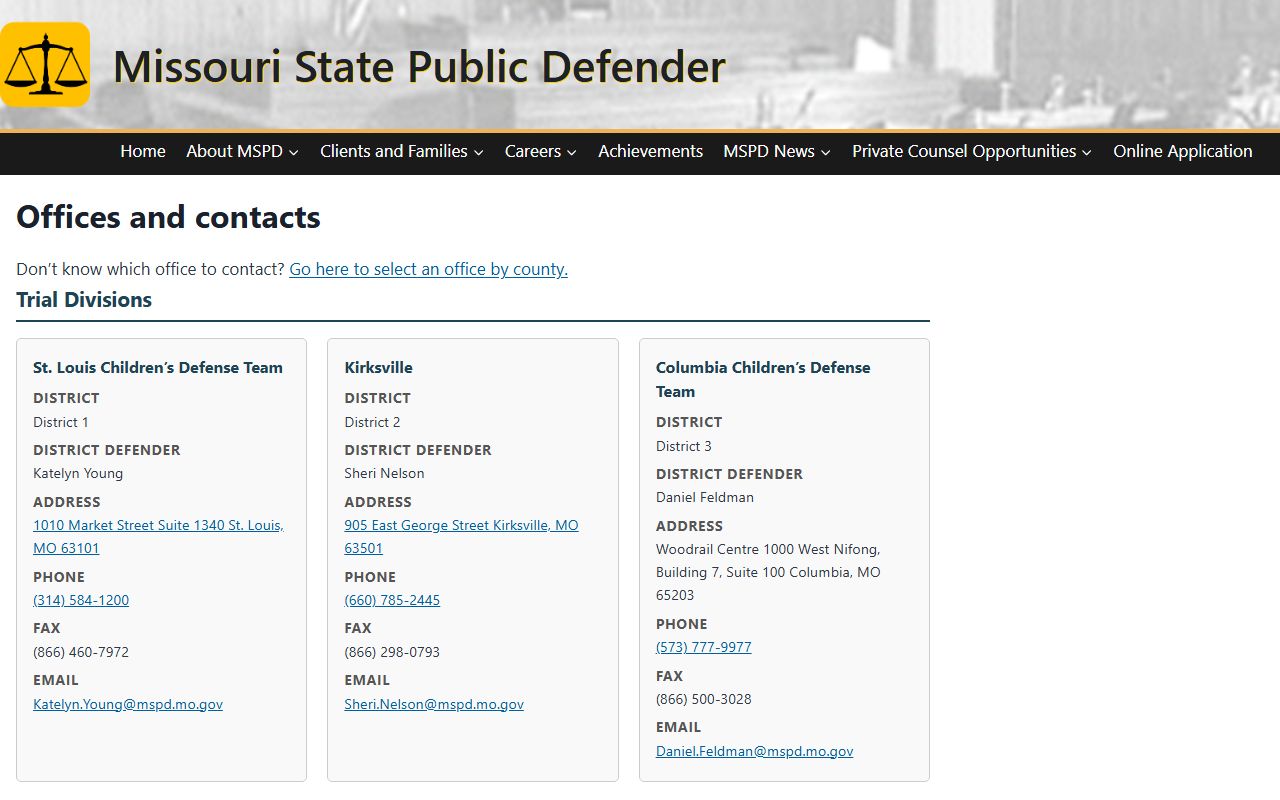
When a Clinton County criminal docket shows appointed counsel or public defender involvement, the court record tracks the case while the public defender office handles representation questions.